

Balancing Hormones on Your Plate: The Menopause Nutrition Blueprint
By Michele | Certified Menopause Coach, Girls Gone Strong
At some point in perimenopause or menopause, many women have the same thought at the dinner table:
“Wait… did the rules change and no one told me?”
The menopause diet isn't a fad or a restriction plan — it's a recalibration. A way of eating that matches the biology you're actually living in right now, not the biology of your 30s. And once you understand the why behind the changes, the what becomes surprisingly intuitive.
The breakfast that used to keep you energized now leaves you foggy by 10 a.m. A glass of wine that once felt like a simple pleasure now disrupts your sleep. Weight shifts to your midsection, your mood feels more fragile, and your old “healthy” habits suddenly feel out of sync with your new body. It’s disorienting and it’s also an invitation.
Menopause isn’t a punishment or a failure of willpower. It’s a biological renovation. The hormonal symphony that carried you through your reproductive years is changing its score. Food becomes one of the most tangible ways you can support that transition, not to “fix” your hormones, but to nourish the system that processes them.
This isn't a diet. It's a menopause nutrition plan — a blueprint for curating your plate so that every meal actually matches what your changing body needs right now, in this hormonal chapter, not the one you were in five years ago.
📚 Want the big-picture view of what’s changing? Start with our guide to the perimenopause transition for a deeper look at hormones and symptoms.
What to Eat During Menopause — and What Food Can (and Can't) Do for Your Hormones
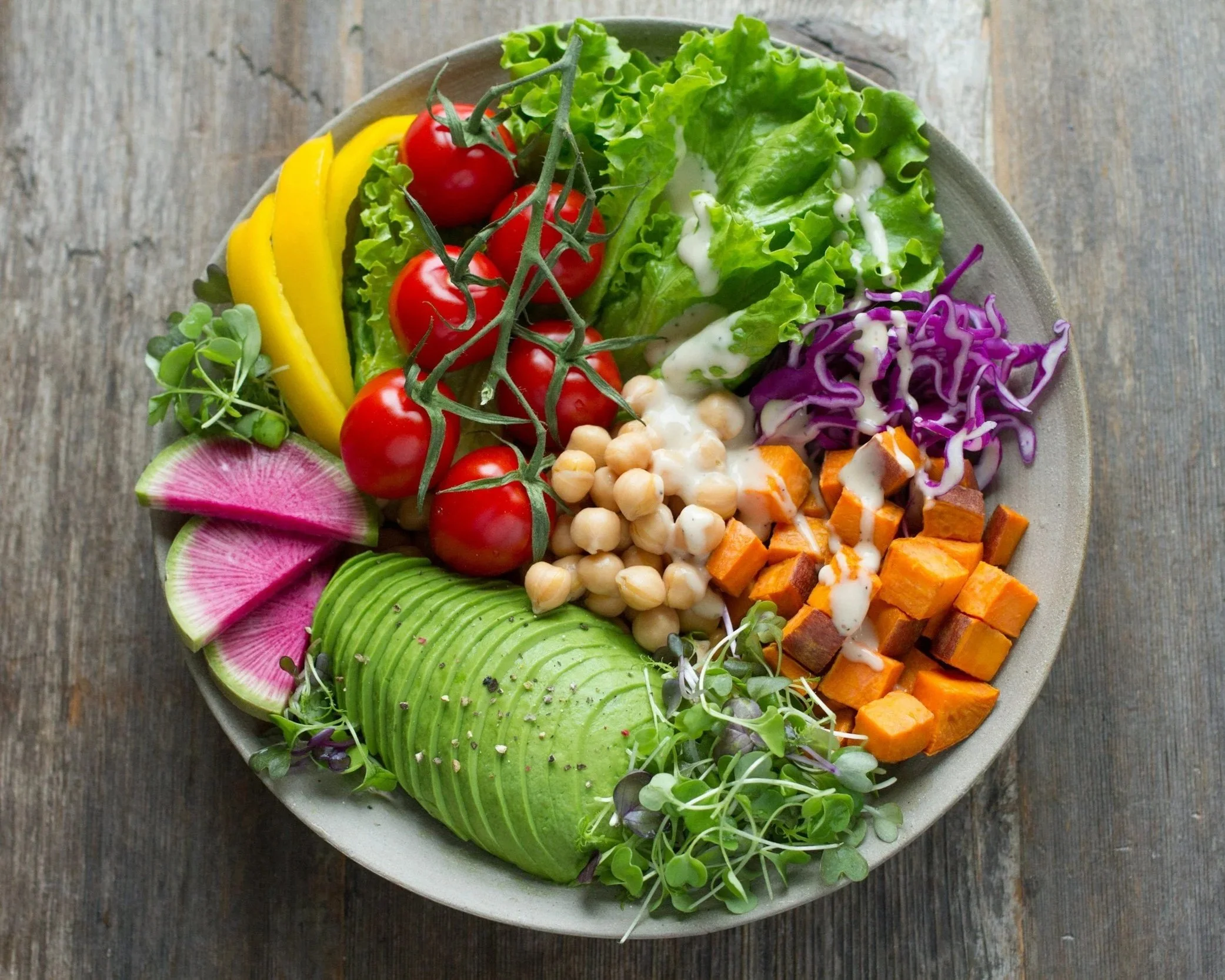
When women ask what to eat during menopause, the answer is less about specific superfoods and more about building an overall pattern of eating that supports the systems most affected by hormonal change — your gut, your blood sugar, your bones, your brain, and your mood.
Before we step into the kitchen, a gentle reframe.
No meal (no matter how beautiful or organic) can replace your own estrogen or progesterone. Nutrition can’t “cure” hot flashes or guarantee symptom-free nights. It’s not a substitute for medical care or, when appropriate, hormone therapy.
What food can do is powerful in a different way. The way you eat may help:
Support healthy hormone metabolism (how your body activates, uses, and clears hormones)
Stabilize blood sugar and insulin, which shape energy, cravings, and midsection weight
Nourish your brain and nervous system, affecting mood, sleep, and focus
Fortify bones, muscles, and connective tissue, which are all changing in midlife
Feed the microbiome that quietly influences everything from estrogen levels to inflammation
Think of your plate as the terrain your hormones move through. You can’t control every wave, but you can cultivate calmer waters.
📚 If weight shifts are front and center, explore our section on weight changes in menopauseand how to support your body with compassion.
Menopause and Gut Health: Meet Your Estrobolome
The connection between menopause and gut health is one of the most fascinating and least discussed areas of midlife wellness — and it has a direct impact on everything from hot flash frequency to mood stability to how your body processes and clears estrogen.
Your Internal Garden
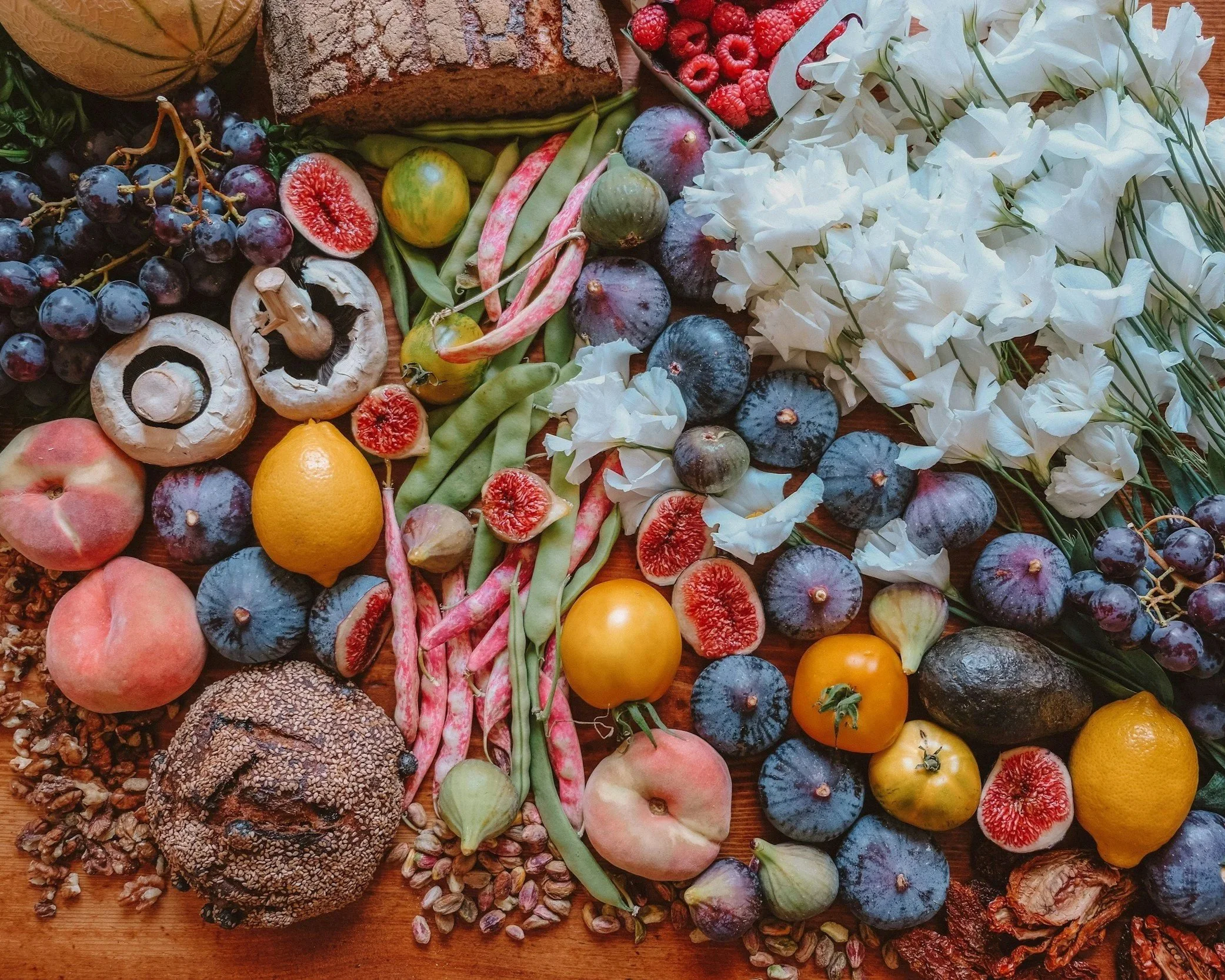
Inside your intestines is an ecosystem of bacteria, fungi, and other microbes often called the microbiome. A specific subset of those microbes is sometimes referred to as the estrobolome, the collection of bacteria that help metabolize and recycle estrogens.
Here’s the simplified choreography:
Your liver packages up used estrogens and sends them to your gut for elimination.
Certain gut bacteria produce enzymes (like β-glucuronidase) that can re-activate some of those estrogens.
Depending on the balance, your body may reabsorb a portion back into circulation or eliminate them.
Too much reactivation? Your body may experience relatively higher estrogen activity.
Too little or too rapid clearance? Estrogen can feel especially low, potentially amplifying some menopause symptoms.
Rather than trying to micromanage this, we focus on creating a stable, diverse internal garden:
Fiber as daily compost
Aim for a variety of fibers over the course of a week:
Leafy greens, cruciferous vegetables
Berries and other intact fruits
Beans, lentils, and chickpeas
Oats, quinoa, and other whole grains
Nuts and seeds
Fiber:
Feeds beneficial bacteria
Helps support regular bowel movements
Helps bind and escort used hormones and other compounds out of the body
This is a general description of fiber's role in digestion and is not intended as medical advice.
Prebiotic foods as soil enhancers
Prebiotics are fibers that your beneficial bacteria especially love. Think:
Onions, garlic, leeks
Asparagus, artichokes
Dandelion greens and other bitter greens
These are like fertilizer for your microbiome—subtle, cumulative, and powerful over time.
You’re not just “eating for digestion.” You’re feeding the community that helps determine how much estrogen stays in circulation and how much exits gracefully.
Phytoestrogens and Menopause: Gentle Plant Signals with Nuance
Phytoestrogens and menopause have a complicated relationship in the wellness world — they're either praised as natural hormone replacements or dismissed as ineffective. The truth, as with most things in midlife health, is more nuanced and more interesting than either extreme.
How They Actually Work
Phytoestrogens (like those found in soy, flax, and some legumes) have a structure that allows them to bind to estrogen receptors. But they’re much weaker than your body’s own estrogen, and they tend to favor certain receptor subtypes.
In broad strokes:
Some receptors (often called ERα) are more concentrated in tissues like the breast and uterus.
Others (ERβ) are more prominent in bone, brain, and blood vessels and are often associated with regulatory or balancing effects.
Many phytoestrogens have a higher affinity for ERβ, which is one reason they’re being studied for supporting bone, vascular, and brain health in midlife. For some women, they may also gently support temperature regulation and mood.
Why Response Is So Individual
A key detail most articles skip: your gut bacteria influence how you respond to phytoestrogens.
Some people have microbes that can convert soy isoflavones into S-equol, a metabolite that may have stronger estrogen-like activity in certain tissues.
Others don’t produce much equol at all.
This is one reason why research on soy and menopause is mixed and why listening to your own body and your clinician matters.
How to Invite Them In (Without Going Dogmatic)
Rather than “dosing” phytoestrogens, think of them as gentle regulars at your table:
Fermented soy: tempeh, miso, natto, traditionally prepared tofu
Legumes: chickpeas, lentils, split peas
Flax and sesame seeds: rich in lignans, another type of phytoestrogen
Practical ideas:
Add a spoonful of freshly ground flax or a sprinkle of sesame to oats, yogurt, or smoothies.
Rotate in tofu or tempeh stir-fries a couple of times a week, ideally with plenty of vegetables and fiber.
Use miso in a warm, savory broth or as a base for dressings.
The goal isn’t perfection or hitting a magic number. It’s experimenting with plant foods that may help support estrogen pathways, not replace your own hormones.
Omega-3s and Menopause: Essential Fats for Brain, Mood & Midlife Metabolism
Omega-3 fatty acids and menopause are a pairing that deserves far more attention than it gets. As estrogen's neuroprotective role shifts during perimenopause and postmenopause, the quality of fat in your diet becomes one of the most direct dietary approach you have for supporting brain health, mood stability, and inflammatory balance.
Your brain is roughly 60% fat by weight. In menopause, as estrogen’s neuroprotective role shifts, quality fats become deeply important NS not just for “heart health,” but for mood, cognition, and inflammation.
Omega-3s: The Brain’s Velvet Cushion
Omega-3 fatty acids (EPA and DHA):
help maintain flexible cell membranes (which affects how brain cells communicate)
modulate inflammatory pathways
are being studied for their role in mood support and cognitive function during midlife
You’ll find them in:
Fatty fish: salmon, sardines, mackerel, trout
Plant sources: walnuts, chia, hemp, and flax (these provide ALA, which the body can convert in small amounts to EPA/DHA)
If you enjoy fish, think of one or two seafood-centric dinners per week as a gift to your brain and nervous system. If you’re plant-based, emphasize a variety of seeds and nuts, and talk with your provider about whether an algae-based omega-3 might make sense.
Monounsaturated Fats: The Silky Steady-Energy Oils
Monounsaturated fats (like those in olive oil, avocados, and almonds) support:
cardiovascular health
satiety and blood sugar stability
a more luxurious, satisfying texture to meals (which matters for adherence and joy)
Think: a drizzle of extra virgin olive oil on roasted vegetables or a handful of olives alongside a protein-rich lunch. You’re not just adding “fat”; you’re adding slow-burn energyand sensory pleasure.
Protein & Collagen: Building the Midlife Framework
As estrogen declines, several structural changes accelerate:
Muscle mass and strength tend to decrease (sarcopenia)
Bone density can drop more quickly
Skin and connective tissue may feel less plump and resilient
Nutrition can’t stop time, but it can absolutely help shape the slope of these changes.
Protein: Your Daily Construction Material
Protein is essential for:
preserving and building muscle
supporting immune function
helping you feel full and steady between meals
Protein intake during menopause is one of the most consistently underestimated nutritional needs — and one of the easiest to address once you understand why it matters. In midlife, many women actually need more protein than they did in their 20s and 30s, especially if they’re strength training.
Practical anchors:
Include a meaningful protein source at each meal: eggs, fish, chicken, Greek yogurt, cottage cheese, tofu, tempeh, lentils, beans, or a well-formulated protein powder if needed.
Aim to make protein and fiber the “center of gravity” on your plate, with fats and starches rounding things out.
📚 To see how protein and movement work together, explore our story on strength training for perimenopause and why muscle is your midlife power organ.
Collagen & Its Builders
Collagen is the primary structural protein in skin, bone, and connective tissue. After menopause, production naturally declines.
You can support collagen in two main ways:
Through food & nutrients
Vitamin C (citrus, berries, peppers)
Amino acids like glycine and proline (found in protein-rich foods, bone broth, gelatin)
Minerals like zinc and copper
Optionally, with collagen peptides
Hydrolyzed collagen peptides from bovine or marine sources are designed to be easily absorbed and may help support your body’s own collagen production.
A simple ritual: whisk collagen into a warm drink (like almond milk with cinnamon) for an evening “beauty and bone” elixir.
Collagen isn’t mandatory, and it’s not a miracle. But for some women, it can be a helpful layer in a larger architecture of bone, skin, and joint care.
Blood Sugar, Insulin & the “Meno-Belly” Story
One of the most universal complaints in menopause:
“I’m eating the same way, moving my body… and my midsection has a mind of its own.”
As estrogen declines, the body often becomes a bit more insulin resistant. Skeletal muscle (your main sugar sink) may shrink if you’re not actively strength training. Cortisol (your stress hormone) may be more volatile.
Food choices can help smooth the ride:
Pair carbohydrates with protein and fat
Instead of toast alone, try toast with avocado and egg.
Instead of a plain bowl of pasta, add shrimp, chicken, or white beans plus veggies and olive oil.
Favor slow, complex carbs
Think: whole grains, beans, lentils, root vegetables, intact fruit.
These lead to a slower rise and fall in blood sugar, which your energy and mood will feel.
Avoid the extremes
All-day grazing and intense restriction both send stress signals. Your midlife body tends to thrive on regular, composed meals rather than chaos.
This isn’t about cutting out joy. It’s about building a plate that keeps your nervous system calmer, your energy steadier, and your body less likely to store excess visceral fat.
💡 Blood sugar and hot flashes are more connected than most women know. When blood sugar drops — especially overnight — your body releases cortisol to compensate. That cortisol surge is often what's triggering nighttime heat spikes and early morning wake-ups. The Find Your Cool 3-Day Reset addresses this directly with a morning protein anchor, a cooling method, and a sleep upgrade — all working together to stabilize your internal terrain.
Micronutrients for Midlife Resilience
A few nutrients become especially important as you step into your Second Spring:
Calcium & Vitamin D: Quiet Guardians of Bone
Estrogen’s decline speeds up bone turnover.
Calcium-rich foods: dairy if tolerated, fortified plant milks, leafy greens, tofu set with calcium, sesame seeds plus adequate vitamin D support bone mineral density.
Vitamin D: from sun exposure, foods like fatty fish, and/or supplementation if needed helps your body actually absorb that calcium.
Talk with your clinician about whether you need a vitamin D level check and how to personalize your bone-support plan.
Magnesium: Mineral of Softening
Magnesium is involved in hundreds of enzymatic reactions, including:
muscle relaxation
nervous system regulation
sleep architecture
You’ll find it in:
leafy greens, beans, nuts, seeds, whole grains, cacao
Many midlife women notice that optimizing magnesium through food and, with a provider’s guidance, possibly supplements can support a sense of calm and more easeful sleep.
📚 For more sleep-supportive ideas, visit our guide to reclaiming your nights with a sleep sanctuary plan for perimenopause.
B Vitamins: Energy & Nerve Support
The B-vitamin family helps:
convert food into usable energy
support brain and nerve function
maintain healthy red blood cells
Sources include:
whole grains, eggs, fish, poultry, leafy greens, legumes
You don’t have to memorize each vitamin’s role. It’s enough to know that a varied, colorful, minimally processed pattern usually covers many bases.

From “What Should I Eat?” to Rituals That Feel Like You
Luxury in midlife isn’t about perfection. It’s about presence.
A few ways to infuse your menopause nutrition blueprint with both science and soul:
The Morning Anchor:
Choose a breakfast pattern that always contains: protein + fiber + healthy fat.
Examples:
Greek yogurt with berries, sprouted ground flax, and walnuts
Tofu scramble with greens, mushrooms, and avocado
A protein-rich smoothie with leafy greens, berries, seeds, and a high-quality protein powder
This becomes your “I’m starting on solid ground” ritual.
💡 This is Day 1 of your free reset. The Morning Anchor breakfast protocol you just read (20–30g of protein within 60 minutes of waking) is Stabilizer 1 in the Find Your Cool 3-Day Reset. It was designed specifically to steady blood sugar, reduce morning cortisol, and set the hormonal tone for your entire day.
The reset gives you three high-protein breakfast options, exact timing, and the science behind why this single habit can change how the rest of your day feels.[Download the Free Reset →]
The Calm Cup Ritual:
Swap at least one “jitter drink” or late-night glass of wine for something nervous-system friendly:
Ceremonial matcha (with L-theanine for calm focus)
Evening herbal tea or lightly sweetened cacao, sipped slowly
You’re not just changing a beverage; you’re changing the story your nervous system hears: from “push harder” to “you’re allowed to rest.”
Kitchen as Sanctuary:
Turn one meal prep per week into a ritual—music, candle, intentional chopping. You’re not just cooking; you’re tending to your future self, the one who will open the fridge and feel cared for instead of overwhelmed.
This isn’t a performative wellness routine for social media. It’s private, quiet, and deeply practical: small daily choices that keep your body feeling more loved than managed.
This isn’t a performative wellness routine for social media. It’s private, quiet, and deeply practical: small daily choices that keep your body feeling more loved than managed.
🌿 Your Plate Is One of Your Most Powerful Hormonal Tools.
You now have the blueprint. Protein that builds and preserves. Fiber that feeds your microbiome and escorts used hormones out. Healthy fats that fuel your brain and your mood. Phytoestrogens that gently buffer fluctuating estrogen. Micronutrients that protect your bones, your heart, and your sleep.
The next step isn't perfection. It's one small, consistent shift — starting tomorrow morning.
The Find Your Cool 3-Day Reset gives you exactly that — a simple, structured three-day plan built around the Morning Anchor breakfast protocol, a blood sugar stabilizing approach, and four daily habits that your body may actually notice.
Small daily choices that keep your body feeling more loved than managed. 🌿
Important Medical Disclaimer
This article is for educational and lifestyle purposes only and is not intended to diagnose, treat, cure, or prevent any disease. It does not replace personalized medical advice. Always consult a qualified healthcare provider about your specific symptoms, medical history, and before starting or changing any medication, supplement, or wellness practice related to menopause or midlife health.
