

The Alchemy of Calm: Adaptogens for Menopause Anxiety in Your Second Spring
By Michele | Certified Menopause Coach, Girls Gone Strong
Have you felt a quiet hum beneath your days lately?
Not quite fear. Not quite worry. More like a subtle internal vibration you can’t quite name. A sense of restlessness. Fragility. A feeling that your emotional center has shifted.
For women seeking natural remedies for menopause anxiety, approaches that work with the body's own chemistry rather than suppressing it, adaptogens represent one of the most promising and time-honored categories of support available during this transition.
Your hormones, once rhythmic anchors, are in transition.
Your brain is recalibrating pathways of calm.
Your nervous system is adapting to a new equilibrium.
This is biology in motion.
In Traditional Chinese Medicine, menopause is not viewed as an ending but as an initiation - a redirection of energy, a deepening of wisdom. At NovaPause, we approach this moment with both science and soul, supporting the neurobiology of stress while honoring the emotional and spiritual layers of change.
Let’s explore how adaptogens may gently support emotional steadiness during this Second Spring.
Not sure if what you're feeling is anxiety, hormones, or both? Our free symptom quiz identifies your personal pattern in under a minute — and gives you a starting point that's specific to you. [Take the Free Quiz →]
Why Calm Feels Different During Perimenopause & Menopause
Your emotional center shifts in midlife because the systems that once buffered stress quietly are changing. Understanding what’s happening beneath the surface reduces fear and restores agency.
1. Your Brain’s Calm Pathways Are Recalibrating
Perimenopause anxiety relief begins with understanding why the anxiety is happening in the first place and it almost always traces back to the same neurochemical shifts.
As progesterone and its metabolites decline, GABA activity (the brain’s primary calming pathway) can temporarily shift. Many women notice:
Increased sensitivity to stress
Anxiety that lingers
Restless evenings
For a deeper understanding of this transition, explore our NovaGuidePerimenopause 101.
2. Your “Spark” Neurochemistry Is Evolving
Estrogen interacts with serotonin and dopamine systems involved in mood, motivation, and vitality. Many women describe this as a subtle loss of inner “lift” or a sense that their spark has dimmed, even when life is objectively “fine.”
Some women experience:
Emotional flatness
Self-doubt
A loss of inner lift
Brain fog
This is chemistry. And chemistry can be supported.
If mood swings feel prominent, explore our section on mood swings and anxiety symptoms.
3. Your Stress Threshold Narrows
Midlife is layered:
Career demands
Aging parents
Growing or grown children
Relationship shifts
Financial and health pressures
When sleep becomes fragmented (night sweats, early wake-ups), cortisol patterns can shift. You may feel “tired but wired.”
If sleep disruption is central, visit our blog on Reclaiming Your Nights: A Sleep Sanctuary Plan for Perimenopause
💡 Your nervous system is asking for support — not more information. If you're feeling overwhelmed just reading about what's happening in your body, that's completely valid. Our free Find Your Cool 3-Day Reset includes the exact 4-6 breath technique used to calm the nervous system during both anxiety spikes and hot flashes because they share the same root driver.
Start there. Three days. Four stabilizers. Real relief.[Download the Free Reset →]
What Are Adaptogens for Menopause Anxiety?
Adaptogens are botanicals and fungi that may help the body adapt to stress. Rather than acting as strong sedatives or stimulants, they are often described as supporting balance in the stress-response system over time. Some adaptogens have been studied for their effects on mood, sleep, resilience, and hormonal transitions.
Emerging research and traditional use suggest that certain adaptogens may help support:
Stress resilience
Cortisol balance
Sleep quality
Emotional steadiness
Cognitive clarity
They are best viewed as companions, not cures.
Let’s explore five adaptogens that are commonly used to support emotional balance and how they may fit into a menopause-friendly calm ritual.

5 Adaptogens for Menopause Anxiety & Stress
1. Ashwagandha – The Velvet Anchor
Perfect for:
Inner tension
Restless evenings
"Tired but wired" patterns
Why It’s Used (Science):
Ashwagandha for menopause is one of the most widely studied applications of this ancient botanical. Ashwagandha (Withania somnifera) has been researched for its ability to support cortisol balance, nervous system relaxation, and sleep quality — all of which become more fragile during the hormonal shifts of perimenopause and postmenopause. Some studies suggest it may help support a healthy stress response and balanced mood.
The Soul of It:
Think of ashwagandha as a velvet-weight blanket across your chest—warm, steady, reassuring. It doesn’t numb you; it gently invites your body to loosen its grip.
How It’s Commonly Used:
Ashwagandha is frequently taken as a capsule, tincture, or mixed into warm drinks as a “moon milk” or evening latte. Always follow product directions and consult your healthcare provider, especially if you take medications or have thyroid concerns. Individual results vary and ashwagandha is not appropriate for everyone. Consult your healthcare provider before use, especially if you have thyroid conditions or take medications.
NovaPause Curated Option:
Moon Juice offers an adaptogenic formula with ashwagandha designed to support stress resilience.
2. Rhodiola Rosea – The Golden Mind
Perfect for:
Emotional exhaustion
Mental overload
Low drive
Why It’s Used (Science):
Rhodiola (Rhodiola rosea) for menopause fatigue is a particularly well-matched application, especially for women who describe feeling emotionally depleted, mentally overloaded, or like their inner spark has dimmed. Rhodiola is often described as gently energizing without feeling overly stimulating. It has been studied for its potential to support mental stamina, mood, and cognitive clarity, particularly in states of fatigue and stress.
The Soul of It:
Rhodiola feels like crisp mountain air—awakening, clarifying, serene. It’s less about hype and more about helping you feel more like yourself again.
How It’s Commonly Used:
Rhodiola is typically used earlier in the day as a capsule or tincture, as it can feel too activating for some women if taken at night. Start low and go slow, especially if you tend toward anxiety.
NovaPause Curated Option:
Thorne Rhodiola extract provides standardized dosing and third-party testing.
3. Schisandra Berry – The Five-Flavor Harmonizer
Perfect for:
Emotional overwhelm
Frayed boundaries
Feeling "unsettled" or scattered
Why It’s Used (Science + Tradition):
In Traditional Chinese Medicine, schisandra (Schisandra chinensis) is known as a five-flavor berry that helps preserve vital energy. It is traditionally used to support the Shen (spirit-heart), liver health, and emotional grounding. Modern research is exploring its antioxidant and adaptogenic properties, it may enhance emotional grounding and overall vitality.
The Soul of It:
Schisandra gathers your energy inward, like drawing a cloak around your shoulders. It helps you feel more contained, less porous to every passing stressor.
How It’s Commonly Used:
You’ll find schisandra in tinctures, powders, and blended elixirs. Because of its complex flavor, many people enjoy it in teas or mixed tonics.
4. Reishi – The Spirit Mushroom
Perfect for:
Restless nights and frequent wake-ups
Emotional heaviness
Feeling overstimulated or “on edge”
Why It’s Used (Science + Tradition):
Reishi (Ganoderma lucidum) is often called the “mushroom of immortality” in traditional frameworks. It is considered a tonic for the spirit, traditionally used to support immune balance, nervous system calm, and sleep. Many people use reishi to help support the body’s shift toward the parasympathetic “rest and digest” state, which can foster emotional ease.
The Soul of It:
Reishi is stillness—like forest air after rain. It doesn’t demand that you calm down; it invites your entire system to remember what calm might feel like.
How It’s Commonly Used:
Reishi is frequently included in evening teas, tinctures, or powders added to warm drinks. Many people find it supportive as part of a nightly wind-down ritual.
5. Pearl Powder – The Illuminator
Perfect for:
Emotional sensitivity
Ungrounded feelings
Stress that shows up in your skin
Why It’s Used (Tradition):
Pearl powder has been used in various traditional systems for centuries to support a sense of calm, radiance, and inner cooling. It’s rich in minerals, and in traditional frameworks, it is said to “settle the heart” and help ground the spirit.
The Soul of It:
Pearl is lunar energy—cooling, softening, luminous. It’s the feeling of exhaling under a full moon, knowing you don’t have to hold everything together alone.
How It’s Commonly Used:
Pearl powder is often taken internally (per product guidance) or used topically in skincare rituals. If you choose to ingest it, consult your healthcare provider, especially if you have allergies or are on medications.
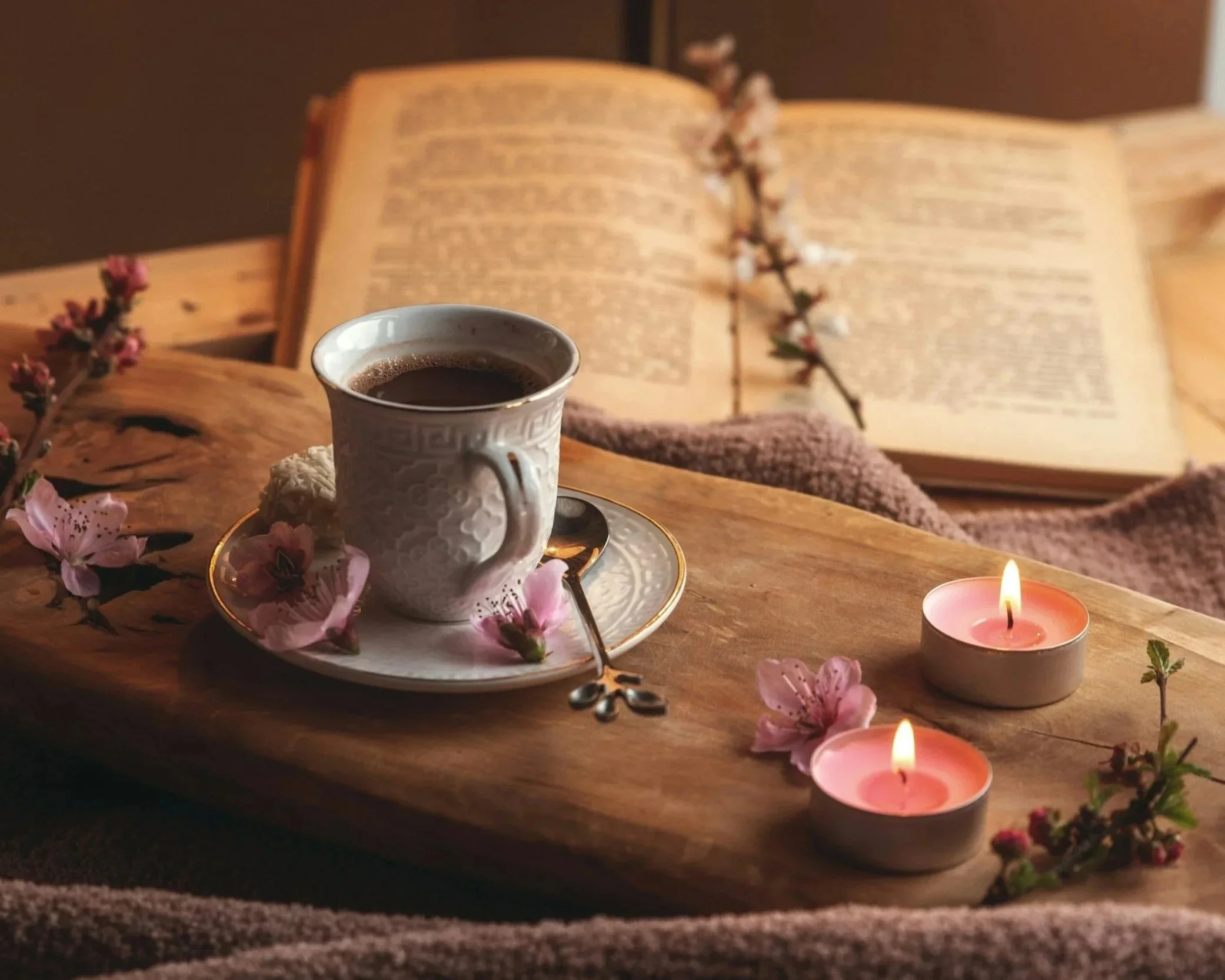
Creating Your Calm Ritual with Adaptogens
Adaptogens are not quick fixes, and they’re not magic bullets. They seem to work best when they’re part of a consistent, mindful ritual, not something you gulp down between emails. Think of them as collaborators in your nervous-system care.
Try this simple 5-minute evening calm ritual for menopause-related anxiety and stress support:
1. The Grounding Minute
Place both feet flat on the floor. Let your hands rest on your thighs or over your heart.
Inhale through your nose for a count of 4
Exhale slowly for a count of 6–8
Repeat for 5–10 breaths. You’re sending gentle signals of safety to your nervous system and beginning to shift out of “fight or flight.”
2. The Botanical Sip
Prepare a warm tea or elixir with your chosen adaptogen. Perhaps reishi in the evening or ashwagandha as part of a moon milk, based on your provider’s guidance and your own response.
Warmth itself can be soothing to the body and may help your system associate evening with comfort, not scrolling.
3. The Yin Point Massage
Gently massage the center of your foot sole (Kidney 1 point in TCM), or simply rub your feet slowly with both hands.
This practice can help draw your awareness down from the mind into the body. If you tend to spin mentally at night, this may help you feel more grounded and less “in your head.”
4. The Gentle Descent
Dim the lights. Close or soften screens.
Ask yourself: “What can wait until tomorrow?”
This is where you choose rest over perfection. Put your to-do list on paper, not on your nervous system, and allow your evening to become a soft landing instead of another performance.
You don’t need a flawless routine. You need consistent signals of safety and care, night after night.
🌿 Already building your evening ritual? The Find Your Cool 3-Day Reset gives you a structured daily framework that pairs beautifully with the adaptogen ritual above — including a bedtime breathing practice and sleep environment upgrade designed to lower cortisol and support deeper rest.
🌿 Calm Is Not a Destination. It's a Daily Practice.
The adaptogens, rituals, and nervous system tools in this article are powerful — but they work best when they're part of a consistent daily structure, not something you reach for only when the anxiety peaks.
If you're ready to build that structure, start with something simple.
The Find Your Cool 3-Day Reset is a free, focused plan that addresses the nervous system, blood sugar, and sleep — the three foundations that influences how your body experiences stress, anxiety, and hormonal symptoms every single day.
Three days. Four stabilizers. One clearer, calmer you. 🌿
Download Your FREE Find Your Cool 3-Day Reset →
Want to understand what's specifically driving your anxiety and mood symptoms? Our free quiz identifies your personal hormonal pattern in under a minute. Take the Free Quiz →
FAQ: Adaptogens for Menopause Stress
Are adaptogens safe during menopause?
Many adaptogens are generally considered safe for most people, but tolerance and needs can vary, especially during perimenopause and post menopause. Always consult your healthcare provider or qualified practitioner before beginning any new supplement. Safety depends on factors like:
Current medications (including antidepressants, thyroid meds, blood pressure meds)
Health history (autoimmune conditions, thyroid issues, liver concerns, etc.)
The dose, quality, and form of the adaptogen
How long do adaptogens take to work?
Adaptogens tend to work gradually.
Some women notice subtle shifts (like feeling slightly less reactive or sleeping a bit deeper) within days or weeks.
More often, any meaningful change is noticed over 2–6 weeks of consistent use, especially when paired with stress-reduction habits, improved sleep hygiene, and nourishing nutrition.
Think of adaptogens as steady companions, not quick fixes.
Can I combine adaptogens?
Yes, but do so mindfully. Some formulas combine herbs based on synergistic effects. Start slowly.
Start with one adaptogen at a time to understand how your body responds.
Introduce combinations slowly.
Work with a practitioner if you have complex health conditions or are on multiple medications.
Your body’s feedback is your best data.
Should I still consider hormone therapy?
Adaptogens are not replacements for hormone therapy. They live in a different lane:
Adaptogens may help support stress resilience, sleep, and emotional balance.
Hormone therapy addresses specific hormonal deficiencies and symptoms more directly.
Many women use both, under medical guidance, as part of an integrative plan that also includes nutrition, movement, and nervous-system care. Your best path is the one tailored to your history, risks, and goals, in partnership with your healthcare team.
💡 Still not sure which symptoms are hormonal and which are anxiety? Most women can't tell — because during perimenopause, they're almost always connected. Our free symptom quiz was designed to help you untangle exactly that. It takes under a minute and gives you a personalized starting point.
Affiliate Disclosure
NovaPause participates in affiliate programs, including the Amazon Services LLC Associates Program. This means NovaPause may earn a commission from qualifying purchases made through links on this site, at no additional cost to you.
Important Medical Disclaimer:
This article is for educational purposes only and is not intended to diagnose, treat, cure, or prevent any disease. Always consult with your healthcare provider about your specific symptoms, medical history, and before starting or changing any supplement, medication, or wellness practice.
