

NOVAGUIDEPerimenopause 101
What is Happening, Why It Matters, and How to Feel Like Yourself Again.
Last updated September 2026.
Maybe your period is still coming, but it isn't quite as predictable as it used to be. Maybe sleep suddenly feels different. You are more anxious or irritable than usual. You walk into a room and forget why you're there. Your body feels different, even though you haven't intentionally changed anything.
And somewhere along the way, you begin wondering:
Could this be perimenopause?
Perimenopause means “around menopause.” It is the transitional stage leading up to your final menstrual period, when ovulation becomes less predictable and hormones such as estrogen and progesterone can fluctuate significantly.
For some women, those changes are subtle. For others, they affect sleep, mood, temperature regulation, concentration, menstrual cycles, sexual health, energy, and everyday quality of life.
What makes this transition particularly confusing is that there is no single perimenopause experience. Symptoms can come and go. They can change from month to month. And many of them can look like stress, aging, thyroid problems, anxiety, or other health conditions.
This NovaGuide is designed to help you understand the transition, recognize common patterns, know when something deserves medical attention, and feel more prepared to talk with your healthcare provider.
Because understanding what may be happening is often the first step toward feeling less blindsided by it.
Table of Contents
The Perimenopause Timeline — When It Starts & How Long It Lasts
The First Signs — The Obvious Changes & the “Sneaky Symptoms”
Navigating Your Health — Why Your Symptoms Are Your Most Powerful Tool
Disclaimer: This NovaGuide is intended for general educational and informational purposes only. It does not diagnose perimenopause, menopause, or any other condition and is not a substitute for individualized medical advice from a qualified healthcare professional.
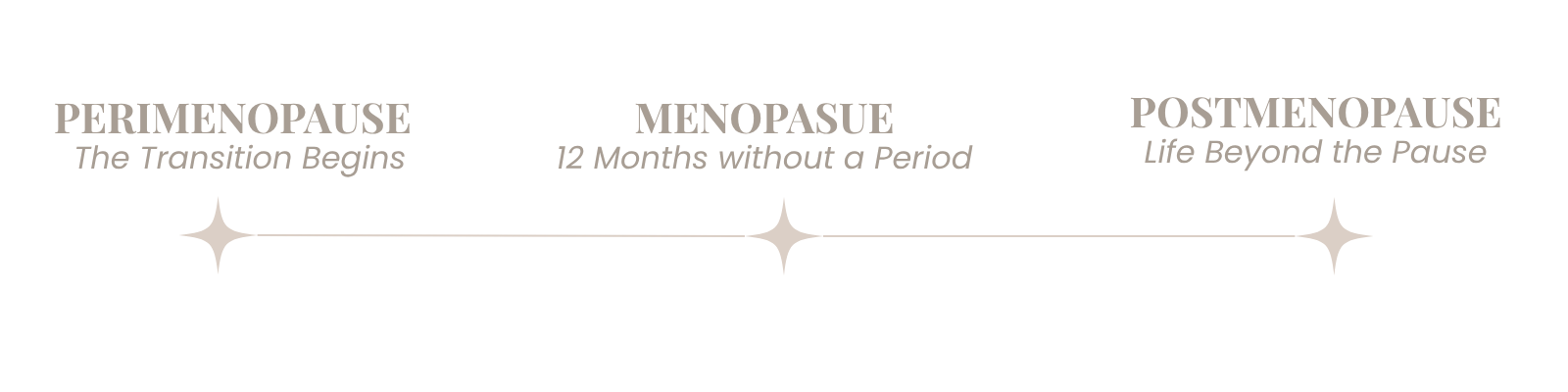
🌙 The Stages of the Menopause Transition
We often use the word “menopause” to describe an entire chapter of life, but medically there are several distinct stages. Understanding the difference can make the whole transition feel much less confusing.
🌘 Perimenopause
Perimenopause is the transitional stage leading up to menopause. During this time, ovulation becomes less predictable and hormone levels can fluctuate.
Your periods usually continue during perimenopause, although the timing, flow, and length of your cycles may begin to change.
And because ovulation can still occur, pregnancy is still possible during perimenopause.
Symptoms vary widely. Some women experience very little disruption, while others notice hot flashes, night sweats, sleep problems, mood changes, vaginal symptoms, concentration problems, or significant changes in their menstrual cycle.
🌗 Menopause
Menopause is technically a point in time, not a multi-year phase.
For someone who is not using a treatment that alters bleeding patterns, menopause is generally recognized after 12 consecutive months without a menstrual period or spotting.
You only know you have reached menopause after those 12 months have passed.
🌕 Postmenopause
Postmenopause begins after menopause and continues for the rest of your life.
Some symptoms may improve over time, while others can continue. This stage also brings a greater focus to long-term health, including bone strength, cardiovascular health, muscle preservation, metabolic health, and vaginal and urinary health.
Menopause itself is not a disease. It is a normal biological transition.
That does not mean uncomfortable or disruptive symptoms have to simply be endured.
✨ The Science
Estrogen and progesterone change substantially during the menopausal transition. Estrogen also plays a role in tissues throughout the body, which helps explain why menopause is associated with changes that extend well beyond the menstrual cycle.
After menopause, lower estrogen levels are also associated with changes in bone density and cardiovascular risk, making preventive health increasingly important.
👉 Key Takeaway
Perimenopause is the transition. Menopause marks the final menstrual period in retrospect. Postmenopause is everything that follows.
📚 Want to go deeper? Read Perimenopause vs. Menopause: Understanding the 3 Stages of the Transition
⏳ The Perimenopause Timeline: When It Starts & How Long It Lasts
One of the first questions women ask is:
How do I know if I'm old enough for this to be perimenopause?
There is no exact birthday when it begins.
When Does Perimenopause Start?
The menopausal transition most often begins in the 40s, although timing varies from woman to woman. The National Institute on Aging notes that most women begin the transition between ages 45 and 55.
Some women experience changes earlier.
If you are younger than 45 and noticing significant menstrual or menopause-like symptoms, talk with your healthcare provider. Your age can influence whether testing or additional evaluation is appropriate.
If you are under 40, changes such as infrequent or absent periods should not automatically be assumed to be routine perimenopause. Premature ovarian insufficiency and other possible causes may need to be considered.
That doesn't mean something serious is necessarily wrong.
It means you deserve an appropriate medical evaluation rather than being told to simply wait it out.
How Long Does Perimenopause Last?
There is no universal timeline.
The transition typically lasts several years, although it can be shorter or longer. Symptoms can also change throughout that time, which is why you may have months when you feel relatively normal followed by periods when sleep, mood, bleeding, or hot flashes suddenly become much more noticeable.
That unpredictability is one reason women often spend years experiencing symptoms before realizing they may be connected.
⏩ Early, Premature & Surgically Induced Menopause
Not every woman reaches menopause on the same timeline or through the same path.
Early menopause refers to menopause occurring between ages 40 and 45.
Menopause before age 40 is considered premature and deserves medical evaluation.
Surgical menopause occurs when both ovaries are removed before natural menopause. Because the major source of ovarian hormones is removed abruptly, symptoms may appear suddenly and can be more intense than during a gradual natural transition.
👉 Key Takeaway
There is a wide range of normal timing, but younger age changes how menopause-like symptoms should be evaluated.
👋 Perimenopause Symptoms Checklist: The Obvious Changes & Sneaky Signs
Many women expect hot flashes to announce perimenopause.
Sometimes they do.
But often the first clues are quieter.
A change in sleep. PMS that suddenly feels much worse. Anxiety that seems to appear out of nowhere. A word that won't come to you. A period that arrives five days earlier than expected.
Think of this section as a way to recognize patterns, not as a diagnostic checklist.
Having one, or even several, of these symptoms does not prove that you are in perimenopause. Many menopause-related symptoms overlap with other medical conditions, medications, stress, and normal aging.
But knowing what can happen gives you a better place to begin.
⚠️ Changes to Your Menstrual Cycle
Changes in the menstrual cycle are one of the classic signs of the menopausal transition.
You may notice:
cycles becoming shorter or longer
periods coming closer together or farther apart
heavier or lighter flow
skipped periods
changes in how long bleeding lasts
Some variation is common during perimenopause, but not every bleeding change should automatically be dismissed as hormonal.
Heavy bleeding, bleeding between periods, bleeding after sex, unusually frequent periods, or bleeding after menopause should be discussed with a healthcare professional.
🌡️ Hot Flashes & Night Sweats
Hot flashes and night sweats—also called vasomotor symptoms—are among the symptoms most closely associated with the menopause transition.
A hot flash may feel like sudden warmth in the face, neck, chest, or upper body and can be accompanied by sweating, flushing, chills, or a rapid heartbeat.
Night sweats are hot flashes that happen while you sleep and may be mild or disruptive enough to repeatedly wake you.
Up to 80% of women experience vasomotor symptoms at some point during the menopause transition.
📚 Explore: How to Naturally Manage Hot Flashes & Night Sweats in Perimenopause.
😴 Sleep Suddenly Feels Different
Sleep changes can appear before many women realize they are approaching menopause.
You may struggle to fall asleep, wake frequently, wake too early, or find yourself wide awake at 2 or 3 a.m.
Night sweats can contribute, but they aren't the only possible reason for disrupted sleep. Mood changes, stress, urinary symptoms, medications, sleep disorders, and other health factors may also play a role.
And once sleep deteriorates, everything else can feel louder. Poor sleep can contribute to irritability, forgetfulness, mood changes, fatigue, and difficulty functioning during the day.
📚 Explore: Sleep Strategies for Perimenopause: The 2 A.M. Wake-Up.
😶🌫️ Brain Fog
You know the word, but suddenly you can't find it.
You walk into a room and forget why you're there.
You read the same paragraph three times.
Forgetfulness and trouble concentrating are commonly reported during the menopause transition. Researchers are still working to understand how much of these cognitive changes relates directly to hormones and how much may be influenced by sleep, stress, mood, aging, and other health factors.
What we don't want to do is automatically assume that every cognitive change is perimenopause.
New, severe, rapidly worsening, or concerning changes in memory or thinking should be discussed with a healthcare professional.
📚 Explore: Perimenopause Brain Fog: Why You Feel Forgetful & What May Help.
😩 Anxiety, Irritability & Mood Changes
Maybe you have always handled stress well, and suddenly everything feels closer to the surface.
Some women notice increased irritability, mood changes, anxiety, or a lower tolerance for stress during the menopause transition.
Hormonal changes may contribute, but they are rarely the entire story. Poor sleep, previous anxiety or depression, work pressure, caregiving, relationship stress, medications, and other health conditions can all affect how you feel.
If anxiety, depression, panic, or mood changes are persistent, severe, or interfering with everyday life, talk with a healthcare professional.
Treatment and support are available.
📚 Explore: Perimenopause Anxiety: Why It May Feel Louder Now (and What Helps).
🌧️ PMS Suddenly Feels Worse
You may still have periods every month, yet the week before them suddenly feels completely different.
Some women notice more irritability, breast tenderness, headaches, fatigue, bloating, disrupted sleep, or emotional symptoms as they move through midlife.
This can be particularly confusing because your periods may still look relatively “normal,” making perimenopause feel like the last explanation anyone considers.
📚 Explore: Why Is My PMS So Much Worse? What Perimenopause May Have To Do With It.
🫀 Heart Palpitations
A racing, pounding, fluttering, or skipped-beat sensation can be frightening.
Some women report palpitations during the menopause transition, and rapid heartbeat can occur alongside hot flashes.
But palpitations also have many possible causes, including heart rhythm disorders, thyroid problems, anemia, medications, dehydration, caffeine, anxiety, and other medical conditions.
Do not assume a new heart symptom is “just menopause.”
New or concerning palpitations should be medically evaluated, particularly if they occur with chest pain, fainting, significant dizziness, or shortness of breath.
📚 Explore: Navigating Heart Palpitations & Anxiety During Menopause.
💪 Achy Joints & Muscles
Joint and muscle discomfort are reported by some women during the menopause transition.
You may notice more stiffness in the morning, aching after activities that never bothered you before, or joints that simply feel different.
But pain can have many causes, including arthritis, injury, inflammatory conditions, changes in activity, and aging.
Persistent, severe, swollen, or function-limiting joint pain deserves medical evaluation rather than automatically being attributed to hormones.
📚 Explore: Joint Pain & Stiffness
⚖️ Weight & Body Composition Changes
Midlife body changes are real, but the explanation is more complicated than “menopause slowed my metabolism.”
Aging, muscle loss, activity, sleep, nutrition, genetics, medications, and overall health can all influence weight.
The menopause transition is particularly associated with changes in body composition and fat distribution, including a tendency toward more abdominal fat.
That doesn't mean every woman will gain substantial weight.
And it certainly doesn't mean changes in your body are proof that you aren't trying hard enough.
📚 Explore: Perimenopause Weight Gain: When I Stopped Trying to Lose Weight and Started Trying to Live.
🌿 Vaginal, Urinary & Sexual Changes
Changes in estrogen can also affect vulvar, vaginal, and urinary tissues.
You may notice:
vaginal dryness
burning or irritation
discomfort during sex
changes in sexual desire
urinary urgency
more frequent urinary tract infections
These symptoms are common, treatable, and worth talking about.
They are not something women simply have to accept as the price of getting older.
👉 Key Takeaway
Perimenopause can involve far more than periods and hot flashes.
But a symptom is a clue, not a diagnosis.
Your age, menstrual changes, health history, medications, lifestyle, and the overall pattern help create the bigger picture.
🦄 Debunking Common Myths About Perimenopause
Misinformation about menopause is everywhere.
Some myths make women unnecessarily afraid.
Others convince them that symptoms don't deserve attention at all.
Let's separate a few of the most common ones.
❌ Myth #1: “Perimenopause is all about hot flashes.”
✅ Fact: Hot flashes are common, but they are only one part of the transition.
Periods, sleep, mood, concentration, vaginal and urinary health, joints, sexual health, and body composition may also change.
And some women never experience significant hot flashes.
❌ Myth #2: “You can't get pregnant during perimenopause.”
✅ Fact: Ovulation may become less predictable, but it can still occur.
If pregnancy is possible and not desired, discuss contraception with your healthcare provider rather than assuming irregular periods mean fertility has ended.
❌ Myth #3: “Menopause means unavoidable weight gain.”
✅ Fact: Weight gain is not inevitable.
Midlife weight is influenced by aging, muscle mass, activity, sleep, nutrition, genetics, medications, and overall health.
The menopause transition appears to be particularly important in changes to where fat is stored, including increased abdominal fat.
That is different from saying hormones alone cause every pound gained.
❌ Myth #4: “Hormone therapy is dangerous for everyone.”
✅ Fact: Hormone therapy is an established medical treatment for certain menopause symptoms and can be appropriate for many women.
It is not appropriate for everyone.
Benefits and risks vary based on factors such as age, health history, type of treatment, route of administration, and individual risk factors.
The right question is not:
“Is hormone therapy good or bad?”
It is:
“Is hormone therapy appropriate for me?”
That is a conversation to have with a qualified healthcare professional.
❌ Myth #5: “Every symptom in your 40s is hormones.”
✅ Fact: Perimenopause can affect many areas of health, but other conditions can look very similar.
Thyroid disorders, anemia, sleep disorders, medications, anxiety, depression, pregnancy, heart conditions, and many other health issues can overlap with menopause symptoms.
Good menopause care includes knowing when to look beyond menopause.
❌ Myth #6: “You just have to push through it.”
✅ Fact: You don't earn anything by suffering silently.
Depending on the symptom, treatment may involve lifestyle changes, behavioral approaches, hormone therapy, nonhormonal prescription medications, vaginal treatments, mental-health care, pelvic-floor care, or other medical support.
You are allowed to ask what your options are.
📚 Want to explore this further? Read 10 Common Menopause Myths Debunked with Science
🛶 Navigating Your Health: Symptoms, Testing & When to Seek Care
One of the most frustrating parts of perimenopause is knowing when a symptom is part of the transition and when it deserves further investigation.
There is no single test that can answer every question.
That doesn't mean your experience isn't real.
It means diagnosis requires context.
👩⚕️ How Is Perimenopause Diagnosed?
For many otherwise healthy women 45 and older with typical menstrual changes and symptoms, clinicians can often recognize perimenopause based on the overall clinical picture rather than a single hormone result.
Your healthcare provider may consider:
your age
your menstrual history
your symptoms
your medical history
your medications
whether another condition could explain what you're experiencing
Hormones can fluctuate substantially during the transition, so a single measurement may not provide the clear yes-or-no answer many women expect.
Testing may become more relevant when symptoms occur at a younger age or when another medical condition needs to be ruled out.
✨ The Science
A blood test is a snapshot.
Perimenopause is a changing process.
That is why routine hormone testing often isn't necessary simply to confirm typical perimenopause in an otherwise healthy woman over 45.
But “you may not need a hormone panel” is not the same as “you don't need medical evaluation.”
Your clinician may still recommend tests for thyroid disease, anemia, pregnancy, or other conditions depending on your symptoms and history.
📝 Why Symptom Tracking Still Matters
A symptom tracker cannot diagnose perimenopause.
What it can do is help you see patterns and communicate more clearly with your healthcare provider.
Instead of arriving at an appointment thinking:
I just don't feel like myself.
you may be able to say:
Over the last eight weeks my cycles have shortened, I am waking three nights a week, and I am having hot flashes several afternoons a week.
That is useful information.
Try tracking:
menstrual dates and flow
hot flashes or night sweats
sleep
mood or anxiety changes
headaches
brain fog
vaginal or urinary symptoms
medications or medication changes
anything that seems to trigger or worsen symptoms
You don't need to document every sensation in your body.
The goal is to notice meaningful patterns.
💡 Tip
Track the symptoms that matter most to you for several weeks and bring the information to your next healthcare appointment.
Your lived experience is valuable clinical context.
It just isn't a substitute for medical evaluation.
🚩 When Should You Talk With a Healthcare Provider?
You don't have to wait until symptoms become unbearable.
If something is interfering with your sleep, work, relationships, emotional health, sexual health, or everyday quality of life, that alone is a reasonable reason to ask for help.
Medical evaluation is particularly important for:
very heavy or prolonged bleeding
bleeding between periods or after sex
any bleeding after menopause
menopause-like symptoms before age 45
absent or very infrequent periods before age 40
new or significant heart palpitations
chest pain
fainting
significant shortness of breath
rapidly worsening cognitive changes
severe anxiety or depression
unexplained or rapid weight change
persistent or severe pain
symptoms that simply feel unusual or concerning to you
Perimenopause is common.
That doesn't mean everything that happens during midlife should be blamed on it.
👉 Key Takeaway
Being informed isn't the same as self-diagnosing.
It's being prepared to participate in your own healthcare.
🩵 A New Chapter of Self-Awareness
Perimenopause is not an ending or a disease to be cured. It is a natural, powerful transition that marks the beginning of a new chapter. By understanding the changes happening within your body (from the “sneaky” symptoms to the new focus on long-term health), you can meet this journey not with fear, but with knowledge, self-compassion, and the right support.
🌿 Your Next Step — Two Ways to Begin
You now understand what perimenopause is, when it tends to begin, what some of the common symptoms look like, and why diagnosis usually involves more than one blood test.
You don't need to fix everything today.
Choose the next step that feels useful.
Option 1 — Make Sense of Your Symptoms
Our free symptom quiz helps you explore the symptoms you're experiencing and points you toward the NovaPause information most relevant to you.
The quiz is for educational and general wellness purposes only. It is not a diagnostic or clinical assessment.
Option 2 — Start With a Few Simple Habits
Download the free Find Your Cool: 3-Day Reset, designed to help you begin with a few practical, evidence-informed wellness strategies rather than trying to overhaul everything at once.
Download Your FREE 3-Day Reset →
Find Your Cool is an educational wellness resource and is not a substitute for medical advice or clinical care.
Explore NovaGuides
Medical Disclaimer
NovaPause provides educational information and general wellness resources, not individualized medical advice.
This NovaGuide is intended for general educational and informational purposes only. It is not intended to diagnose, treat, cure, or prevent perimenopause, menopause, or any other medical condition and is not a substitute for professional medical advice, diagnosis, or treatment.
Symptoms associated with the menopause transition can overlap with many other medical and mental-health conditions. Do not assume that a new, persistent, severe, or concerning symptom is caused by perimenopause.
Always consult a qualified healthcare professional regarding your individual symptoms, medical history, medications, treatment options, and whether additional testing or evaluation is appropriate.
Seek prompt medical care for urgent or severe symptoms, including chest pain, significant difficulty breathing, fainting, severe or unusual bleeding, or any symptoms that may represent a medical emergency.
Never disregard professional medical advice or delay seeking care because of something you have read on NovaPause.where
Sources
The information in this NovaGuide is informed by current guidance and patient education from established medical and public-health organizations.
Key References
Cleveland Clinic. Perimenopause: What to Expect as You Approach Menopause. Updated 2025.
Mayo Clinic. Perimenopause: Symptoms & Causes. Updated 2025.
The Menopause Society. Understanding Perimenopause. 2025.
Office on Women’s Health (U.S. Department of Health & Human Services). Menopause Symptoms and Relief. 2025.
National Health Service (NHS). Early or Premature Menopause. 2024.
Royal Free London NHS Foundation Trust. Surgical Menopause. n.d.
UPMC. Menopausal Symptoms and Cardiovascular Disease Risk. 2016.
This page has been written and fact-checked by the NovaPause Editorial Team
Last updated Ju